


Book Review
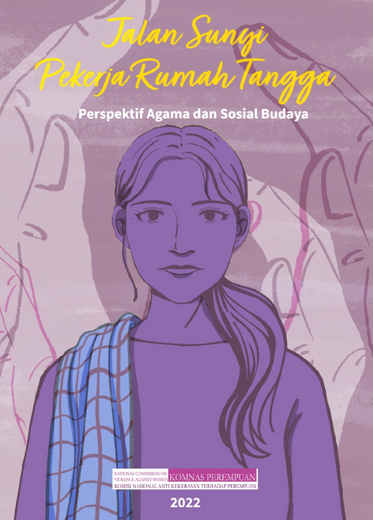
Title: The Silent Path of Domestic Workers (Religious and Socio-Cultural Perspectives)
Editor: Luviana Ariyanti
Publisher: Komnas Perempuan
Year: 2022
Genre: Non-Fiction
Synopsis
The Silent Path of Domestic Workers presents seven essays exploring the situation of domestic workers (PRT) in Indonesia from both religious and socio-cultural perspectives. These approaches are meant to enrich policy advocacy for the protection of domestic workers, which has so far been dominated by legal discourse. The socio-cultural lens highlights how cultural practices within social structures perpetuate forms of modern slavery experienced by domestic workers. Meanwhile, religious perspectives—from Protestant Christianity, Islam, Buddhism, Catholicism, and Confucianism—emphasize teachings on compassion, justice, and solidarity with marginalized communities.
From a socio-cultural standpoint, Martha Hebi discusses domestic workers in relation to slavery within Sumbanese social hierarchy. She describes modern slavery in Sumba as “blood flowing in the body: unseen—unless wounded—but undeniably present.” In Sumba, forms of servitude such as ata ndai, ata ngandi, and ata pa’kei remain embedded in daily life, where enslaved individuals serve their masters without wages and often experience violence, exploitation, and—particularly for women—sexual abuse. Children born from these abuses are also forced into servitude.
The continuation of such practices is closely tied to historical colonial structures and the longstanding role of Sumba as a source of sandalwood, horses, and slaves. When viewed through religious history, slavery was also normalized in ancient contexts—for example, the story of Hagar in the Hebrew Bible, a woman without autonomy over her own body.
Religious teachings, however, offer moral foundations for justice. Buddhism, for instance, teaches that all beings possess Buddha-nature and are equal. Christianity upholds the belief that every human is created in God’s image and worthy of dignity. Islamic teachings highlight the importance of fair agreements—ijab and qabul—based on mutual consent, encouraging balanced employment contracts between domestic workers and employers. Confucianism stresses that domestic workers are not slaves and therefore must not be subjected to discrimination, exploitation, or dehumanization.
Religious institutions have also taken concrete action. The Archdiocese of Jakarta, for example, founded the Domestic Workers Community (Paguyuban Pekerja Rumah Tangga / Paperta) as an expression of religious commitment to social justice, solidarity, and human dignity.
Ultimately, the book amplifies the collective voice and hope of domestic workers across Indonesia: urging the government and Parliament to pass the Domestic Workers Protection Bill (RUU PPRT) and ratify ILO Convention 189, while ensuring proper implementation of these protections.
Key Lessons from the Book
- Upholding justice for marginalized communities
- Treating all human beings with dignity
- Promoting gender equality
- Remaining consistent in advocating for human rights
Why This Book Is Compelling
This book offers a comprehensive portrayal of domestic workers’ lived experiences by tracing the roots of exploitation from ancient systems of slavery to its modern forms. It serves as a vital advocacy tool for the long-fought campaign—spanning more than two decades—to protect domestic workers in Indonesia. The book highlights the essential roles of religious leaders, cultural figures, and communities in promoting justice for domestic workers, especially women and children.
Writing Quality
The book brings together a diverse range of voices—activists, clergy, pastors, lecturers, and literary practitioners—resulting in rich and varied perspectives. The essays combine personal experiences, participatory action research with domestic workers, and reinterpretations of religious texts through fresh analytical lenses. The dialogue between ancient religious contexts and present-day realities creates a powerful narrative, complemented by clear recommendations for employers, domestic workers, religious leaders, communities, and the state to uphold human dignity and work toward justice.